Pune Classroom Stabbing: Why Are Our 15-Year-Olds Killing Each Other?



Swipe or scroll horizontally to view more media
Pune is known as the “Oxford of the East,” a hub of IT parks, education, and culture. But recently, a darker narrative has emerged from its classrooms. In a shocking incident that has rattled the district, a 15-year-old student stabbed his classmate to death in the middle of a private coaching class in Rajgurunagar. This wasn’t a clandestine alleyway fight; it happened in broad daylight, surrounded by 35 other students and a teacher.
This tragedy is not an anomaly. It is the latest and most gruesome chapter in a rising wave of youth violence sweeping through Pune. From “Koyta Gangs” terrorizing neighborhoods to minors killing over petty insults, the city is facing a crisis. What is turning our children into killers? Is it gang culture, social media glorification, or a complete failure of our educational security systems?
The Rajgurunagar Horror: A Timeline
The incident occurred in a private coaching center in Rajgurunagar, Pune district. About 35 students were attending a lecture when chaos erupted.
The Attack: Without warning, a 10th-grade student, Prayag Somnath Manjare, pulled a knife from his bag and stabbed his classmate, Pushkaraj Dilip Shingade.
- The Aftermath: As the class froze in horror, the attacker fled the scene on his bike. The victim, bleeding profusely, was rushed to a hospital but succumbed to his injuries during treatment.
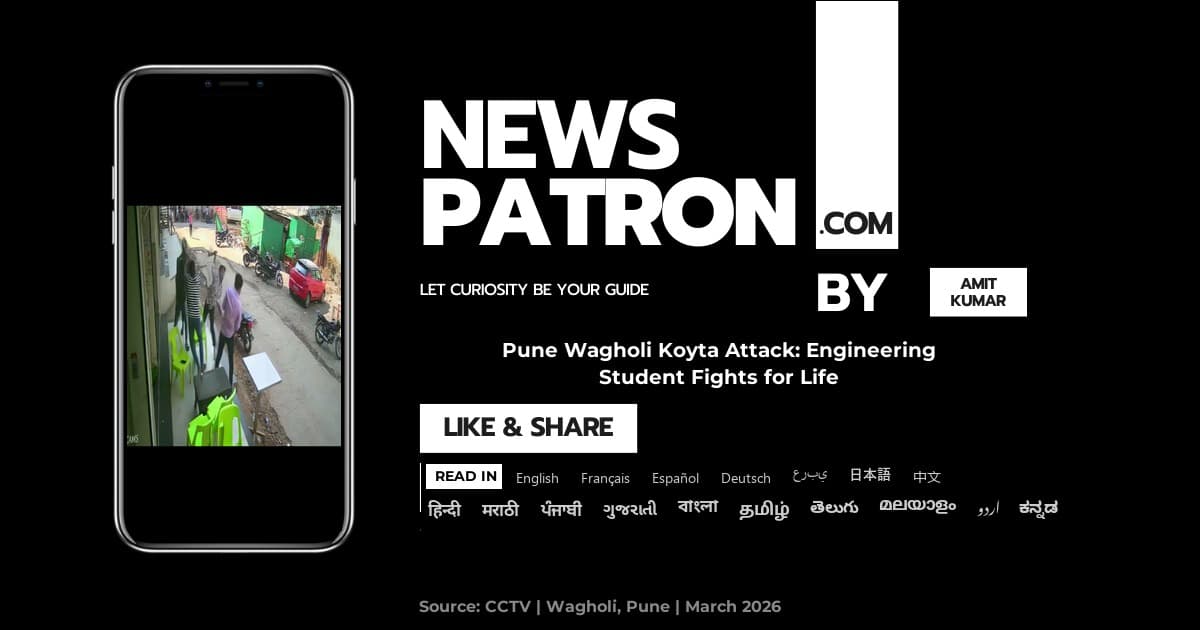
- The Security Failure: Police arrived quickly to review CCTV footage, but the damage was done. The incident has raised terrifying questions for every parent: How did a student walk into a classroom with a knife? Why are there no security checks in places we trust with our children’s lives?
A Pattern of Violence: Pune’s “Gang” Epidemic
This stabbing is part of a disturbing pattern. Over the last 18 months, Pune has witnessed a series of violent crimes involving minors and young adults, often over trivial matters.
- Bajirao Road: 17-year-old Mayank Kharade was murdered in broad daylight.
- Sinhagad Road: A 20-year-old was beaten to death by four people on mere suspicion of petrol theft.
- Wagholi: A man named Raju Lohar was killed by his own friend simply for teasing him about his father being bald.
- Ganesh Immersion: Three minors brutally murdered a boy named Deepak Bankar using sickles and stones after a dispute over a procession queue.
This escalation points to a deeper societal rot. The infamous “Koyta Gang” and “Maya Gang” have become household names, not for their contributions to society, but for spreading terror. When 15-year-olds are settling scores with knives instead of words, we are witnessing the normalization of extreme violence.
The Social Media Catalyst: “Bhai” Culture
Why are children so angry? Experts and observers point to the toxic influence of social media.
- Reel Violence: Platforms like Instagram are flooded with reels glorifying criminals. Dialogues boasting about jail time (“I’ve been to jail four times”) get millions of views.
- Role Models: For many impressionable teenagers, the “Bhai” (gangster) figure has become an idol. The ability to threaten, assault, and instill fear is wrongly perceived as a status symbol.
- OTT Content: Unfiltered access to violent web series on OTT platforms further desensitizes children to aggression, making violence seem like a viable solution to conflict.
The Way Forward: Security and Parenting
We cannot wait for another tragedy to act. The solution requires a two-pronged approach involving both institutions and families.
- Institutional Security: Schools and private coaching classes must implement strict security checks. Bag checks should be mandatory to ensure no weapons enter the premises.
- Parental Vigilance: Parents need to monitor what their children are consuming online. If a child reacts violently to minor issues, early intervention and counseling are crucial.
- Conflict Resolution: We must teach our youth that disputes—whether over a festival queue or a personal insult—can be resolved through dialogue, not murder.
Conclusion
The death of Pushkaraj Shingade is a wake-up call. Pune cannot afford to lose its future generation to gang wars and knife fights. It is time for parents, teachers, and police to come together to de-glamorize violence and secure our classrooms. A city that prides itself on education cannot let its schools become crime scenes.
Sources: rajgurunagar , pune crime news